


The land tax relief initiative has received broad political support. Supporters argue that taxing common areas with little or no development potential places an unreasonable burden on the associations responsible for maintaining them. They also point out that the value of nearby green spaces may already be reflected in the assessed values of surrounding owner-occupied residential properties.
The proposal offers the prospect of lower land tax bills and potentially retrospective land tax relief for associations and housing organisations that meet the ownership and development criteria. Its practical impact will depend on the final legislation, how exemptions may apply to earlier tax years and whether municipalities choose to exercise their exemption powers.
Common areas are an integral part of many Danish residential neighbourhoods. These areas include playgrounds, playing fields and green spaces connected by paths. In some cases, they also include noise protection embankments and lakes.
In most cases, these areas have little or no development potential and are therefore of limited financial value to the homeowners’ associations, which have often acquired them free of charge. The land cannot be developed, sold separately or subdivided; yet the associations remain responsible for maintaining them.
Nevertheless, common areas are generally taxed as recreational land. Under the new Property Valuation Act, such areas must be valued at one-tenth of the land value of surrounding owner-occupied residential properties.
The proposal seeks to address this discrepancy by enabling municipalities to grant a full or partial tax exemption for common areas, provided that specific conditions regarding ownership and development potential are met.
To qualify for a full or partial exemption from land tax under the proposal, the common area must be owned by a homeowners’ association, a cooperative housing association or a non-profit housing organisation. Furthermore, development on the land must either be impossible or possible only to a very limited extent.
The proposal does not provide for an automatic nationwide exemption. Instead, tax relief can only be granted at the relevant municipality’s discretion when the above conditions are met.
The Ministry of Taxation and Economic Growth estimates that approximately 4,500 properties with common areas could qualify for tax relief under the proposed changes. The draft Finance Bill proposes an annual allocation of DKK 10 million from 2027 onwards to cover the resulting revenue loss and municipal administration costs. However, given the number of potentially eligible properties, this is a relatively modest sum, raising questions about the extent to which municipalities will use their exemption powers.
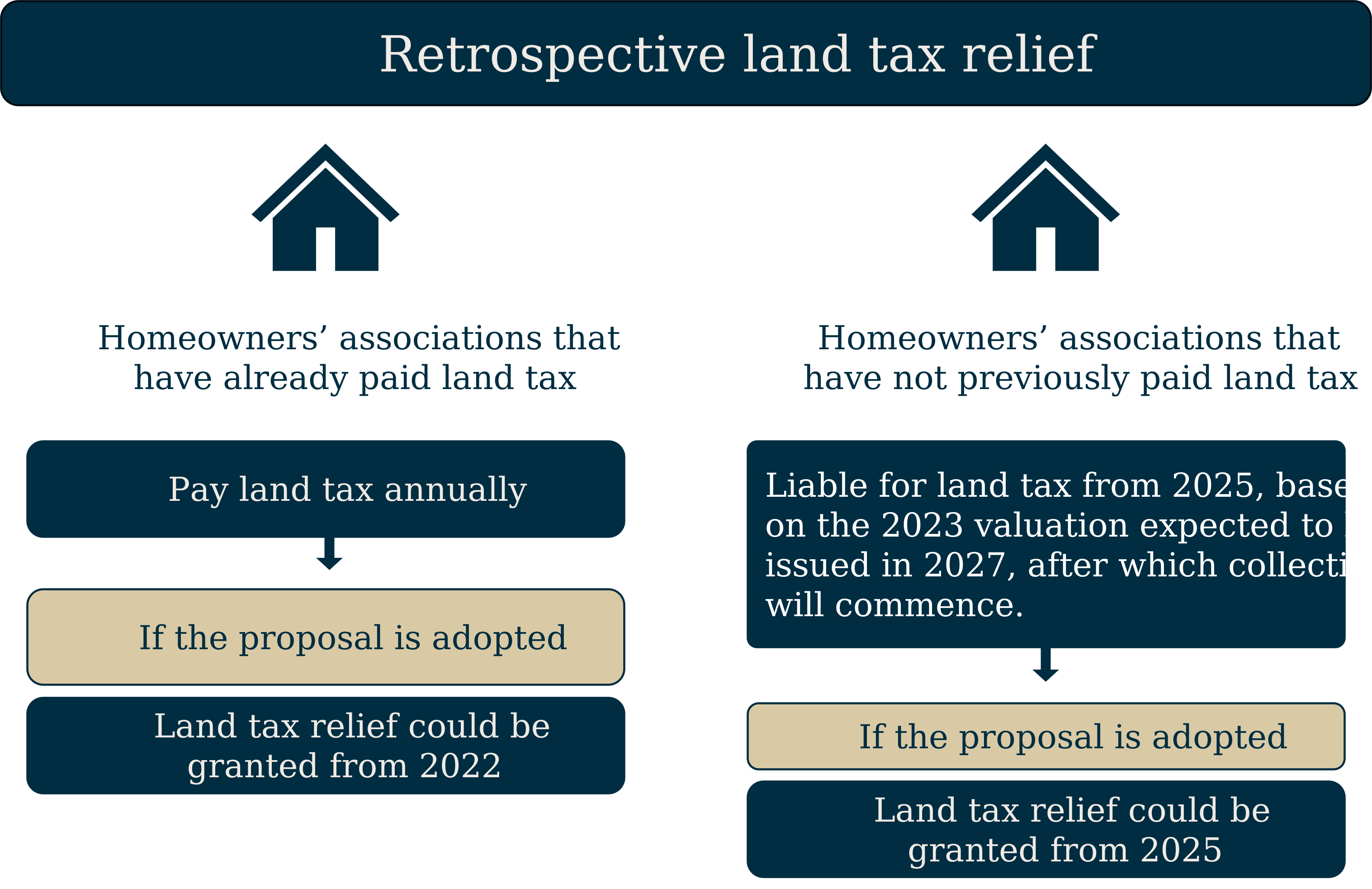
In addition to future exemptions, the proposal could provide retrospective land tax relief. The practical implications would depend on whether the homeowners’ association or another eligible organisation has already paid land tax or whether it has any outstanding tax liabilities.
At Gorrissen Federspiel, we closely monitor developments in the Danish property market, including the proposed land tax exemption for common areas. This proposal has not yet been adopted and requires legislative approval before municipalities can grant such exemptions. We will follow the legislative process closely, including the clarification of the final eligibility criteria, implementation arrangements and timing.
Our Real Estate group advises on all aspects of Danish real estate law and can help you understand the potential implications of the proposal. This includes providing an initial assessment of whether your common areas could qualify for a full or partial exemption as well as offering advice on the possibility of retrospective relief as the rules are finalised.